Star Merge - Match Island Game
- 4.4
- Rating
- 1.00M
- Installs
- Free
- Price
 Analysis by App-foxy
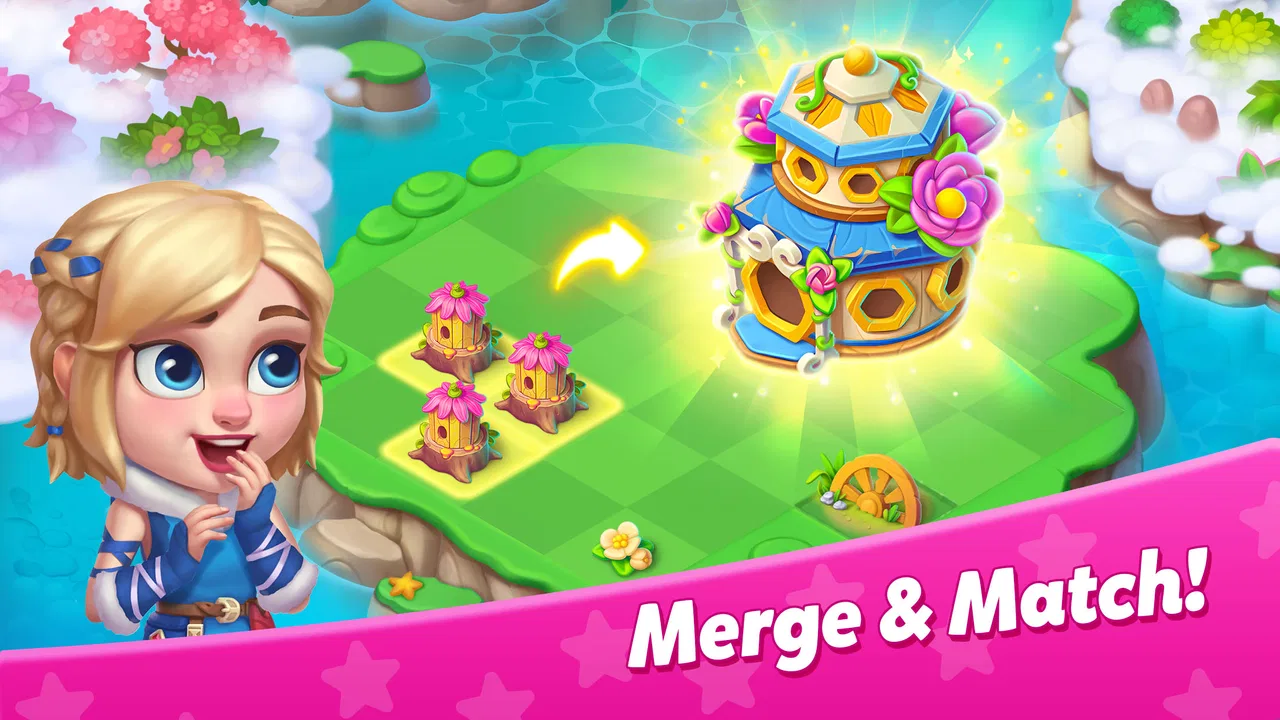
I approached Star Merge - Match Island Game expecting a light matching game, but its appeal comes from combining that familiar idea with a small island-building routine. You match and merge objects, use the results to help restore the island, and gradually turn the setting into a more welcoming place. The pace is deliberately relaxed, so it feels better suited to short, comfortable sessions than to intense competition.
That makes it an easy game to recommend to someone who enjoys casual puzzles but wants a little more purpose than clearing identical pieces from a board. The central loop is simple enough for a first-time player to understand quickly, while the island and farm elements give each successful merge a visible reason. I found that connection useful: rather than making moves only for a score, I was working toward a place that slowly felt more complete.
What the first few minutes feel like
As a casual game from Plummy Games OU, it is designed around accessibility rather than complicated controls. The age rating is Everyone, and the basic interaction is approachable even if you do not usually play merge games. You do not need to learn a large control scheme. The important early habit is to look at the available pieces, identify matching possibilities, and avoid combining items automatically just because a match is visible.
You May Also Like

 Blood Strike: 2.5 Anniversary
Blood Strike’s Loadouts Turn Every Drop Into a Tactical Gamble
A close look at Blood Strike’s custom loadouts: how fast access to signature weapons reshapes its battle royale rhythm, rewards preparation, and narrows the gap between fights.

 Pandora - Music & Podcasts
Pandora’s Music Is Easy to Start, but Harder to Recover
Pandora’s strength is its low-effort path from a seed to a station. Its weak spot is how much confidence it asks you to place in connection, setup, and quiet recovery.

 8 Ball Pool
 Is Built on Rivalries, Rematches, and Routine
A close look at the rivalries, rematches, shared routines, and unanswered safety questions that turn a quick pool match into a persistent mobile community.

 Samsung Music
’s Quiet Strength Is Playing What You Already Own
Its reach comes less from spectacle than from dependable access to a personal library. That simplicity is both the app’s strongest retention engine and its ceiling.

 AccuWeather: Weather Radar
AccuWeather Review: A Quick, Clear Forecast for Everyday Decisions
For everyday plans, the best forecast is the one you can understand quickly. AccuWeather makes rain timing, radar, and local conditions easy to act on, with a few trade-offs.

 Hill Climb Racing
Why Hill Climb Racing Still Turns Crashes Into One More Run
A tiny car, a bumpy hill and one more upgrade: Hill Climb Racing keeps resurfacing because its simple chaos makes every near-miss feel personal.
More From Our News Desk



The free entry point is helpful here. You can try the core loop without paying first, which is exactly what I want from this kind of relaxing game. There are in-app purchases ranging from $0.99 to $114.99 per item, so I would still treat the payment options carefully, especially on a shared device. The free starting experience is enough to decide whether the rhythm suits you before spending anything.
The game has attracted over 1M installs and holds a 4.4 average from around 20K ratings, with 945 reviews. Those figures suggest that the gentle merge-and-build format has found a sizeable audience, but they should not replace your own test. Players who want rapid action may find the opening too calm, while anyone who enjoys gradual progress will probably understand the appeal within a few moves.
One detail I appreciated is that the island gives the board a sense of direction. In many match-and-merge games, the screen can feel like an endless supply of objects with no emotional connection between one task and the next. Here, the promise of saving a magical island and developing a farm gives the routine a softer, more personal frame. It is not a substitute for deep strategy, but it makes small progress feel less disposable.
Getting comfortable before chasing progress
My advice to a new player is to begin slowly and watch how the board fills before trying to maximize every available space. Early merges teach you the visual language of the game: which objects belong together, what changes after a combination, and how much room you should preserve for the next useful move. This is more important than it sounds because a crowded board can make a simple puzzle feel unnecessarily awkward.
Instead of tapping through every possible action, I would first scan the whole play area. Look for clusters that can be joined immediately, then consider whether moving one item would create a better arrangement. This small pause is one of the first meaningful skills in the game. It helps you avoid using valuable space on combinations that do not help your next objective.
The island theme also encourages a different mindset from a conventional match-three game. You are not simply trying to produce a chain as quickly as possible. You are managing a sequence of small improvements. When a merge contributes to a task or helps the setting develop, the reward feels more satisfying if you have planned it rather than performed it randomly.
For a first session, I would play until the basic pattern becomes automatic, then stop before the board starts feeling like work. This game is at its best when it fits into a spare moment: a quiet break, a few minutes after dinner, or a low-energy morning when you want something interactive without pressure. Its design makes it easy to return to, but that does not mean every session needs to be long.
Your first meaningful success
The first satisfying milestone is not merely making a match. It is understanding that a match can feed into a larger chain of progress. Once I stopped viewing each item as an isolated puzzle piece, the island-building side became clearer. A successful action has two layers: the immediate merge and the longer-term improvement it supports.
For someone installing the game for the first time, I would use the opening tasks as a tutorial rather than trying to play independently from the beginning. Follow the visible objective, make the requested combination, and pay attention to what the board gives you afterward. This approach reduces confusion because it shows how the game expects resources and actions to connect.
A useful practical rule is to preserve flexibility. If several pieces can be combined, do not always choose the first available group. Ask which merge leaves the most open room and which one is more likely to help with the current island goal. This is a modest form of planning, but it changes the experience from repetitive tapping into a light puzzle about order and space.
I also recommend treating the farm as part of the progression rather than as decoration. The island setting is what gives the game its identity, and paying attention to how your actions contribute to that setting makes the slower pace easier to appreciate. If you only focus on the board, you may feel that you are repeating the same action. If you connect each action with restoration and building, the loop has more context.
That is where the game works best for beginners. It gives you a clear first success without demanding that you understand every possibility immediately. You can make a basic merge, see the result, and then use that knowledge to approach the next objective with more confidence. The learning curve is gentle, but there is still room to become more deliberate.
Where new players can become confused
The word “merge” can make the game sound more straightforward than it feels once the board contains several types of objects. The challenge is not learning the first combination; it is keeping track of what deserves attention now and what should be left in place. New players may tap quickly, create a crowded arrangement, and then wonder why the next requested action is harder to complete.
My solution is to separate urgent actions from useful-looking actions. If the current objective points toward a particular item or improvement, prioritize the path that supports it. A visually tempting combination may be less valuable than a less obvious one that preserves space or advances the island. This is one of the game’s quiet trade-offs: immediate satisfaction can sometimes work against efficient progress.
Another possible source of friction is the contrast between the relaxing presentation and the need for occasional planning. The game feels cozy, but it is not entirely mindless. You still need to inspect the board, decide what to combine, and think about the consequences of filling a limited area. Players seeking a completely passive experience may be surprised by that small amount of organization.
I would also avoid assuming that every reward should be used at once. In a merge game, keeping a useful item available can be more helpful than consuming it simply because it is ready. The best approach is to connect each action to a current need. That habit becomes especially valuable when several objectives appear to compete for the same board space.
The purchase system deserves similar attention. Since the game is free to start but includes optional items priced from $0.99 up to $114.99, I would not make a purchase during the first session. First learn whether the natural pace is enjoyable. If you later decide to spend, set a personal limit and consider whether the purchase solves a temporary inconvenience or genuinely improves the way you want to play. For families, checking device purchase controls is a sensible safeguard.
How it compares with familiar casual alternatives
Compared with a traditional match-three game, this title feels less focused on quick board-clearing and more focused on accumulation. A conventional match-three option is usually better when I want immediate rounds, obvious scoring, and a clear stop after a short level. Star Merge is more appealing when I want my actions to contribute to a continuing place that I can gradually develop.
It also differs from a pure merge game that concentrates only on upgrading objects. The island and farm setting add a layer of purpose, even though the underlying satisfaction still comes from finding compatible pieces. If you enjoy organizing, restoring, and watching a setting develop, that extra context is a genuine advantage. If you dislike decorative progression and want only the puzzle mechanics, it may feel like unnecessary scenery between decisions.
Against more competitive casual games, its calm style is the main distinction. There is no reason to approach it as a reflex test. I would choose it over a timed alternative when I am tired or distracted, because the slower rhythm gives me room to inspect the board. On the other hand, someone who wants constant pressure, leaderboards, or fast reactions should probably choose a different category of game.
The comparison also matters for storage in your attention, not just on your phone. Star Merge asks you to remember what you are building toward and to return to a developing island. That makes it more involving than a disposable five-minute puzzle, but it can also make the experience feel less instantly complete. The right choice depends on whether you prefer a continuing project or self-contained rounds.
Small strategies that make the island easier to manage
My first concrete tip is to scan before merging. Take a moment to identify all obvious groups, then choose the action that creates the most helpful arrangement. This is especially useful when the board is becoming crowded. A quick scan prevents the common mistake of making a convenient match that blocks a more productive sequence.
Second, use open space as a resource. Players often think only about the objects they need, but the empty areas around them are just as important. A merge that leaves room for future pieces can be better than one that produces a higher-looking result but traps the board. This is a small but meaningful difference between casual tapping and controlled progress.
Third, let the current island task guide your priorities. The most attractive object is not always the one that matters next. When I followed the active goal instead of chasing every possible combination, the game felt more coherent and less cluttered. This is a useful workflow for short sessions because it gives you a clear reason to stop: complete one meaningful step rather than trying to solve everything at once.
Fourth, treat the game as a sequence of compact visits. A realistic routine might be to open it during a commute break, review the board, complete one or two sensible merges, and leave while you still have a clear layout. That approach reduces the temptation to make careless moves simply to keep playing. It also suits the cozy tone better than turning every session into a long optimization exercise.
Finally, do not judge the game only by how quickly the island changes. Restoration and farming themes work through gradual accumulation, so the satisfaction comes from noticing a series of small improvements. If you need dramatic rewards every few seconds, the design may test your patience. If you enjoy seeing a place become more developed over time, the same pacing becomes one of its strengths.
Who will enjoy it, and who should skip it
I think this is a strong fit for players who like gentle puzzle sessions, visual organization, and progress that continues beyond one round. It is also suitable for someone new to mobile games because the entry point is straightforward and the Everyone rating reflects its broad accessibility. The free download makes it easy to experiment without committing money at the outset.
It should appeal particularly to people who enjoy the combination of a familiar matching action and a softer building objective. The island gives the game a warmer identity than a bare puzzle board, while the farm theme adds a reason to care about gradual development. I would recommend it to a friend who wants something calming but still wants a few decisions to make.
I would skip it if your priority is competitive challenge, fast rounds, or highly complex strategy. The game’s pleasure comes from steady improvement, not from mastering a demanding system. I would also be cautious if you are easily tempted by optional purchases, since the available price range means the free starting point should be approached with a clear spending boundary.
Players who want a completely offline-feeling, self-contained puzzle may prefer a simpler alternative with fixed levels. This experience is better for someone comfortable with an evolving island and a board that asks for ongoing attention. Its strengths are tied to that continuity, so the same feature can feel like a weakness if you prefer to finish a level and move on.
What I would do after the first session
After learning the basic merge, I would not rush to unlock or improve everything at once. I would choose one island objective, keep the board reasonably open, and use each combination to support that objective. This gives the next session a clear purpose and makes it easier to tell whether the game’s longer rhythm is genuinely enjoyable for you.
I would also keep expectations realistic about the version. The current version is 1.800 and supports devices running Android 7.0 or later, so Android users with older software should check compatibility before installing. That practical detail matters more than it might seem: a relaxing game is not relaxing if your device cannot run it comfortably.
The developer, Plummy Games OU, has built a game that understands the value of a welcoming first step. You can begin with a basic match, learn through the island’s goals, and gradually decide how much planning you want to bring into each visit. The system does not require expert knowledge, but it rewards players who protect space and think one action ahead.
My overall impression is positive, with one important qualification: the game is strongest when you want calm, incremental progress, not when you are searching for constant novelty. The farm and island setting give the merges a reason to exist, and the free starting point makes the experiment low-risk. The optional purchase range means I would play with spending controls in mind, but that does not undermine the core appeal of trying it without paying.
For a first-time user, the safest path is simple: install it, follow the opening objective, make your first purposeful merge, and pause to see how the island responds. If that small loop feels satisfying, you will probably enjoy developing it over time. If you find yourself wishing for faster rounds or deeper strategy immediately, another casual puzzle will likely serve you better. In my experience, the best reason to keep playing is the combination of a tidy merge routine and a place that gradually feels like yours.
FAQs for Star Merge - Match Island Game
01What is Star Merge - Match Island Game about?
Star Merge - Match Island Game is a relaxing puzzle and island-building adventure. You combine matching items to create more useful objects, complete quests, unlock new areas, and help characters restore a magical world. The game mixes merge mechanics with exploration, resource management, and story-driven tasks, making it suitable for players who enjoy casual progression rather than fast action or competitive battles.
02How does the merging gameplay work in Star Merge?
The main gameplay involves placing three or more identical items together to merge them into an upgraded object. These objects can be used to complete orders, repair locations, produce resources, and advance the island’s development. The board can become crowded quickly, so planning merges carefully is important. Creating larger combinations is generally more efficient and helps conserve valuable space and energy.
03Can Star Merge - Match Island Game be played offline?
Some basic parts of Star Merge may work without a constant internet connection, but online access can be required for loading the game, synchronizing progress, receiving events, watching optional advertisements, and using certain connected features. Offline availability may also vary by device and game version. It is best to launch the game online periodically so progress and updates can be saved correctly.
04Is Star Merge free to download and does it include in-app purchases?
Star Merge - Match Island Game is generally free to download, but it may offer optional in-app purchases. These can include energy, coins, boosters, special bundles, or other resources that speed up progress. Purchases are not always necessary to enjoy the main experience, although energy limits and waiting times may encourage occasional spending. Parents should review device purchase settings before allowing children to play.
05Is Star Merge suitable for children and casual players?
The game is designed primarily for casual players and is easy to understand because its core mechanic is based on matching and combining identical objects. However, the presence of advertisements, optional purchases, timers, and social or online features can vary by version. Adults should check the current age rating and privacy information before installation, especially when the game is being downloaded for a child.
Pros
- Relaxing match-3 gameplay suited to short or longer sessions.
- Island restoration gives progress a clear visual purpose.
- Colorful art style and charming character designs.
- Simple controls make it accessible for casual players.
- Offline play may be available for some core activities.
Cons
- Energy limits can interrupt play during longer sessions.
- Later puzzles may feel repetitive without enough variety.
- Optional purchases can speed up progress or provide extra resources.
- Some events and rewards may require a stable internet connection.
- Ads or promotional offers may appear between gameplay sessions.

Star Merge - Match Island Game
Gallery